The Legacy Trap: How Outdated Software Holds Your 2026 Revenue Hostage (and the Phased Roadmap to Freedom)

.png?alt=media&token=a67c4221-55cc-4970-8ff8-848c7f1c7f84)
The Legacy Trap: How Outdated Software Holds Your 2026 Revenue Hostage
In the executive suite, there is a dangerous financial illusion that frequently goes unchallenged: "If the software still runs, it isn't costing us anything."
For CEOs and CFOs looking at balance sheets, keeping a decade-old core platform on life support feels like fiscal conservatism. You avoided a massive capital expenditure last quarter, the lights are on, and customer orders are still processing.
But beneath the surface, that legacy system is no longer an asset. It is a liability levying a silent, compounding tax on your entire organization. In 2026, market agility is the primary determinant of enterprise value. If your competitors can deploy an AI-driven feature in a weekend while your team requires six weeks of regression testing just to update a payment gateway, you aren’t saving money—your legacy software is holding your revenue hostage.
The Hidden Business Tax of "It Still Works"
When a platform ages past its prime, it stops being a technical problem and becomes a core business bottleneck. For non-technical leaders, this manifests in three distinct ways:
-
The Productivity Drain: Your engineering team isn't spending 80% of their time building new revenue-generating features. They are spending it writing "glue code," managing server patches, and babysitting brittle environments.
-
The Execution Chokehold: Business agility dies. When marketing or product teams want to launch a new digital initiative, they are met with a resounding, "We can't support that with our current architecture."
-
The Conversion Bottleneck: Modern customers expect instantaneous, personalized web and mobile experiences. Legacy backends create latency, slow page loads, and fragile checkout flows. A 100-millisecond delay can slash conversion rates by double digits.
To scale in 2026, enterprises must shift their mindset. Software modernization isn't an engineering vanity project; it is a strategic revenue defense mechanism.
The Strategic Pivot: Shifting from Monolith to Modular
The fear of modernization is entirely valid. Traditional "Big Bang" software rewrites—where you freeze feature development for 18 months and swap out the entire system at once—have a notorious failure rate. They blow past budgets, disrupt operations, and terrify stakeholders.
The modern imperative is Evolutionary Architecture.
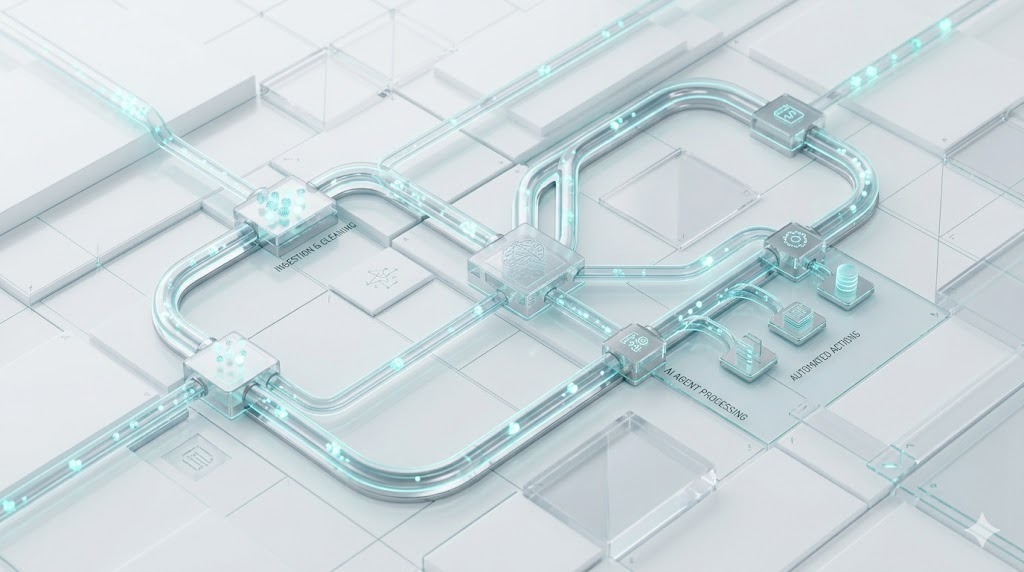
Instead of ripping and replacing, forward-thinking organizations use a phased approach. They isolate the core value-producing layers of their legacy system, wrap them in modern interfaces, and systematically replace components over time. This mitigates operational risk while allowing the business to realize incremental ROI at every stage of the journey.
[Legacy Monolith] ---> (Strangler Facade / API Gateway) ---> [New Microservice]
                                   |
                         (Gradual Traffic Shift)
Technical Deep Dive: Zero-Downtime Refactoring Pathways
For CTOs and engineering directors, the execution of this strategy requires a rigorous, pattern-driven approach. The goal is to decompose a monolithic backend into a modern, scalable layer without experiencing a single minute of customer-facing operational downtime.
1. The Strangler Fig Pattern The most reliable method for decommissioning a monolithic architecture is the Strangler Fig Pattern. Instead of changing the whole system, you build a new system around the edges of the old one, gradually eating away at its responsibilities until the old system can be safely decommissioned.
-
Implementation: Introduce an API Gateway or Reverse Proxy (e.g., Envoy, Kong, or AWS API Gateway) in front of your legacy system.
-
Execution: All traffic initially routes to the monolith. When you rewrite a specific domain—such as the user authentication or billing service—you update the gateway routing rules to point that specific URI to the new microservice. To the outside world, the system remains seamless and unified.
2. Data Decoupling via Change Data Capture (CDC) The hardest part of any modernization is the data layer. Monoliths typically rely on a single, massive, highly normalized relational database. To split this safely, you must decouple the data without corrupting transactional integrity.
-
Implementation: Utilize Change Data Capture (CDC) tools like Debezium alongside an event streaming platform like Apache Kafka.
-
Execution: As writes occur in the legacy database, the CDC tool streams those changes into Kafka in real-time, syncing them to the new service’s micro-database. This allows you to run both databases in parallel, cross-verify data integrity, and execute a zero-downtime cutover when confidence hits 100%.
3. Abstracting the Core with Backend-for-Frontend (BFF) To quickly fix the user experience without waiting for a complete database overhaul, implement a Backend-for-Frontend (BFF) layer using GraphQL or a fast Node.js/Hono layer.
-
Implementation: The BFF layer acts as an aggregator. It talks to the ugly legacy SOAP APIs on the backend but formats and delivers a clean, lightning-fast JSON payload to your modern React or Flutter frontend.
-
Execution: This immediately unbottlenecks customer conversions and frontend development, buying your backend infrastructure team the time they need to refactor the deeper layers safely.
The 2026 Phased Modernization Playbook
To execute this transition without breaking the bank or stalling operations, structure your IT budget and roadmap around four logical phases:
| Phase | Focus | Technical Objective | Business Outcome |
|---|---|---|---|
| Phase 1: Assess & Wrap | Visibility & Isolation | Introduce API Gateways; wrap legacy endpoints. | No immediate system change, but unlocks frontend UI/UX acceleration. |
| Phase 2: Extract | High-Value Domains | Move the most critical bottleneck (e.g., Cart, Checkout) to a microservice. | Immediate improvement in customer conversion and system stability. |
| Phase 3: Streamline | Data & Events | Implement CDC and event-driven pipelines to decouple core databases. | Eradicates internal system dependencies; engineering velocity doubles. |
| Phase 4: Decommission | Final Cutover | Route 100% of traffic to the new layer; turn off legacy servers. | Drastic reduction in infrastructure overhead and maintenance licensing. |
Conclusion: Mitigating the Ultimate Business Risk
In 2026, status quo is your highest-risk strategy. The longer an enterprise waits to address its foundational technical debt, the more expensive the remediation becomes, and the more market share is yielded to cloud-native, agile competitors.
By refactoring monoliths into modular, high-performance backends through a phased, risk-mitigated approach, you protect your current operations while building the foundation for next-generation revenue growth. Stop letting yesterday's code dictate tomorrow's balance sheet.
Is your engineering team spending more time patching holes than shipping features? Our agency specializes in zero-downtime legacy modernization for mid-market and enterprise platforms. Schedule a technical architecture audit with our senior strategists today.